

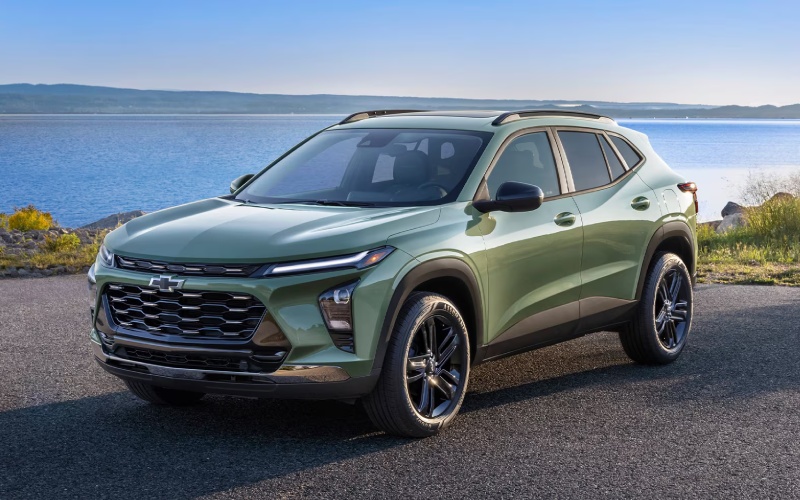
Baker Chevrolet Coopersville - 2026 Chevrolet Trax vs 2026 Hyundai Kona — Which small SUV gives you the better everyday tech and space around Holland, MI?
When comparing two popular small SUVs, many shoppers want to know which one makes daily life easier—staying connected, loading up gear, and feeling confidently supported by driver assistance. Here’s a focused look at how Chevrolet’s small SUV and Hyundai’s small SUV approach these essentials for Holland, MI drivers who balance commutes, school runs, and weekend escapes.
Both models bring large, modern touch-screens and wireless smartphone integration, but the Chevrolet setup pairs standard wireless Apple CarPlay® and Android Auto™ with an available 11-inch center HD touch-screen and a thoughtful control layout that’s easy to learn on the first drive. The Hyundai system offers expansive displays, available Wi-Fi hotspot capability on upper trims, and a long list of connected features. From the driver’s seat, the difference comes down to how streamlined the interface feels in motion. Chevrolet’s menus, physical controls, and quick pairing typically translate to fewer taps and more time with eyes up.
Cabin flexibility is equally important. Both vehicles seat five and feature a 60/40 split-folding rear seat for quick transitions from passengers to cargo. Chevrolet emphasizes usable spaces for day-to-day essentials, with conveniently placed storage for small items and thoughtful cupholder and USB arrangements. Hyundai counters with generous rear-seat room and additional convenience content on select trims. If you frequently pack camping bins or sports bags, both cargo areas handle bulky items with the seats folded; the Chevrolet’s square opening and low load floor make it especially friendly to load.
Safety technology is another frequent question. Chevrolet equips every model with Chevy Safety Assist, including Forward Collision Alert, Automatic Emergency Braking, Front Pedestrian Braking, Lane Keep Assist with Lane Departure Warning, a Following Distance Indicator, and IntelliBeam® High Beam Assist. Hyundai’s SmartSense suite brings comparable foundational aids and, on top trims, offers additional convenience features such as a Surround View Monitor. For most daily driving, the key is how predictably these systems respond. Chevrolet’s consistent alerts and calm interventions tend to earn quick confidence from new owners.
Powertrains influence how relaxed a small SUV feels in traffic. Chevrolet’s turbocharged engine focuses on accessible low-end torque and smooth midrange response, which helps with merges and rolling passes without hunting for gears. Hyundai offers a choice between a naturally aspirated engine and an available turbocharged option; upper trims deliver brisk response, though some shoppers prefer the Chevrolet’s more linear feel during routine errands. Either way, both lineups provide the kind of calm, efficient performance that suits city streets and suburban routes.
If you’re organizing your test drive plan, consider this simple approach:
- Start with seating comfort and visibility—can you settle in and see your surroundings clearly?
- Pair your phone and test navigation—are menus simple and prompts easy to follow?
- Fold the rear seats and load a couple of bulky items—does the opening make sense for your gear?
- Try a familiar route—does the steering, braking, and ride feel natural in your normal rhythm?
For shoppers who want a smart, approachable small SUV with streamlined tech, standard core safety, and confident on-road manners, Chevrolet makes a compelling case. Hyundai’s broader feature availability at the top end is attractive, yet many daily drivers end up preferring the Chevrolet’s intuitive controls and easygoing personality after a back-to-back test drive.
Baker Chevrolet Buick Coopersville is your local resource for a side-by-side drive, product walkarounds, and answers to deeper questions about connectivity, cargo solutions, and safety systems. Our team is proudly serving Comstock Park, Holland, and Muskegon with a friendly, low-pressure experience focused on what matters most to you.
Frequently Asked Questions:
Which small SUV has the more intuitive infotainment setup for everyday use?
Chevrolet’s interface is straightforward and responsive, pairing standard wireless Apple CarPlay® and Android Auto™ with sensible physical controls. Hyundai’s large screens are impressive, and upper trims add convenient connected features; many drivers still find Chevrolet’s layout easier to use on the move.
How do the safety suites compare in real-world driving?
Both include core collision avoidance and lane support features. Chevrolet emphasizes consistent alerts and smooth, predictable interventions across all trims, while Hyundai adds supplemental camera views and parking aids on upper trims. Either way, the best choice is the one whose feedback you find most natural during a test drive.
Which one feels better in stop-and-go traffic and highway merges?
Chevrolet’s turbocharged tuning delivers relaxed low-speed takeoff and steady midrange response, which many commuters appreciate. Hyundai’s available turbo is energetic on higher trims; preferences often come down to the linear feel you experience during your normal route.